




























 305-477-2278
When comparing Accoya vs mahogany exterior doors, two of the most requested materials for custom entries, the decision comes down to more than looks. Both are used in high-end residential projects. Both can be crafted into architecturally striking entries. But they perform very differently over time, especially in coastal Florida, where humidity, salt air, and UV exposure put every exterior material to the test.
What Makes Mahogany a Classic Choice
Mahogany has been the standard for luxury exterior doors for generations. Its dense grain, warm reddish tones, and exceptional workability make it a natural fit for carved entries and traditional designs. It’s also a strong choice for homes where a rich, natural wood aesthetic is part of the architecture.
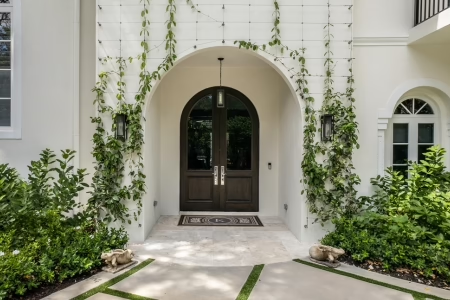
The tradeoff is care. Mahogany rewards a homeowner willing to keep up with it. In South Florida’s climate, that typically means refinishing every 12 to 24 months. This preserves the wood’s rich tone and protects the joints from moisture over time. With regular maintenance, a mahogany door can look stunning for decades. Without it, the wood will gray and weather faster than it should.
What Makes Accoya Different
Accoya is not a wood species. It’s a modified radiata pine that has undergone a process called acetylation, which changes how the wood interacts with moisture at the cellular level. The result is a material that moves significantly less than traditional wood. It also resists rot without chemical preservatives and holds its finish longer under sustained weather exposure.
Where Accoya Performs Best
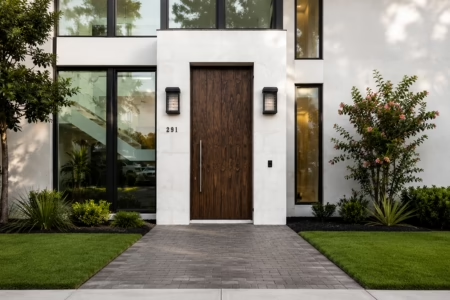
For coastal Florida installations, Accoya’s dimensional stability is a meaningful advantage. This includes oceanfront properties, doors with limited overhang protection, and large-format pivot or folding systems. Accoya also holds the highest biological durability classification available, making it one of the most stable wood materials for demanding exterior environments.
Accoya vs Mahogany Doors: Comparing Long-Term Performance
Mahogany is a strong choice when a deeply grained natural wood aesthetic is the priority. It works best when the door sits in a sheltered location and a regular maintenance schedule is part of the plan.
Accoya is worth specifying when the door faces high weather exposure. It’s also the right fit when long-term performance with minimal maintenance is a priority, or when the project involves large-format doors where dimensional stability matters most.
Choosing between Accoya vs mahogany doors ultimately comes down to how much maintenance you want to take on, and how much weather exposure your entryway will face.
Exclusive Wood Doors manufactures custom entry doors, pivot doors, and folding systems in both mahogany and Accoya for luxury residential projects throughout Florida. Contact us to discuss your project.